
- Product Details
- Clinical Technique #1
- Clinical Technique #2
- Technical Details
- Configurations
- Resources
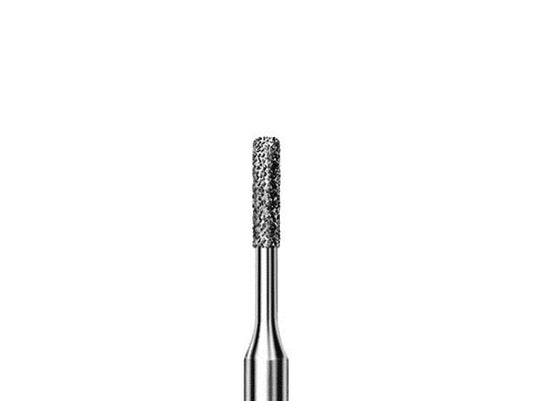
835KRM is a cylinder rounded edge diamond bur with a slim long neck ideal for micro preparation. Medium grit, 107 microns.
- Size: 008
- Size Ø: 008 1/10 mm
- L1 in mm: 4.0 mm
- Maximum Speed: 160,000
Indications for Use
Cavity preparation.
Looking for a way to easily switch to Komet burs? Download and then print a Komet Bur Conversion Card here:
-
Small instruments sizes (838M/830RM) are used for treatment of fissure caries, as well as for substance-preserving opening of larger, deep carious defects.

-
Due to the elliptic shape of figures 953M/953AM, cavities for undermining caries can be excavated in an ampoule-like shape.

-
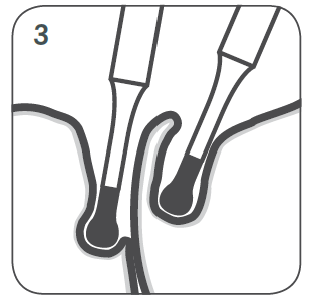
The special shape and the diamond-coated neck of the instruments 830M/953M/953AM enable you to realise rounded surfaces with undercuts, particularly when trimming inner proximal areas.
-
With the adhesive restoration technique, cavity margins should be rounded in order to equilibrate tension between restoration and hard tooth substance. This can perfectly be done with the pear-shaped instrument (830M).

- Initial situation: Undermining fissure and proximal caries in tooth 46.
- Minimally invasive opening and detection of the size of the carious defect with instrument 889M.
- Excavation of minimally undermining fissure caries with the pear-shaped instrument 830RM.FG.009.
- Optimal vision even in deep areas due to the extremely thin instrument necks permitting good flow of coolant. Preparation with instrument 953M.FG.014.
- Completed undermining cavity in tooth 46, occlusal view.
- Aesthetic and anatomically perfect composite restoration in teeth 45 and 46.

Shank Type

Diamond Grit Size Legend

Maximum Permissible Speed Legend

Friction Grip Shank:
- 835KRM.FG.008: 5-Pack (Item Number: 1901453)